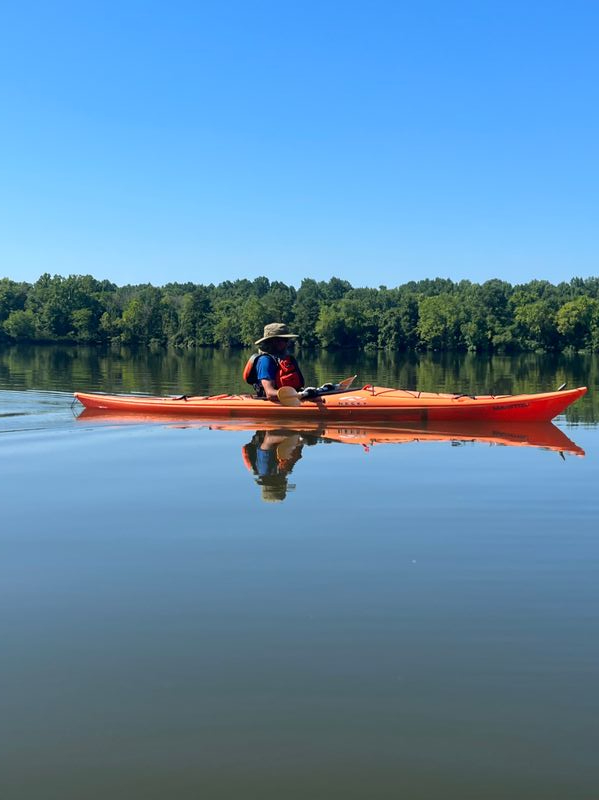
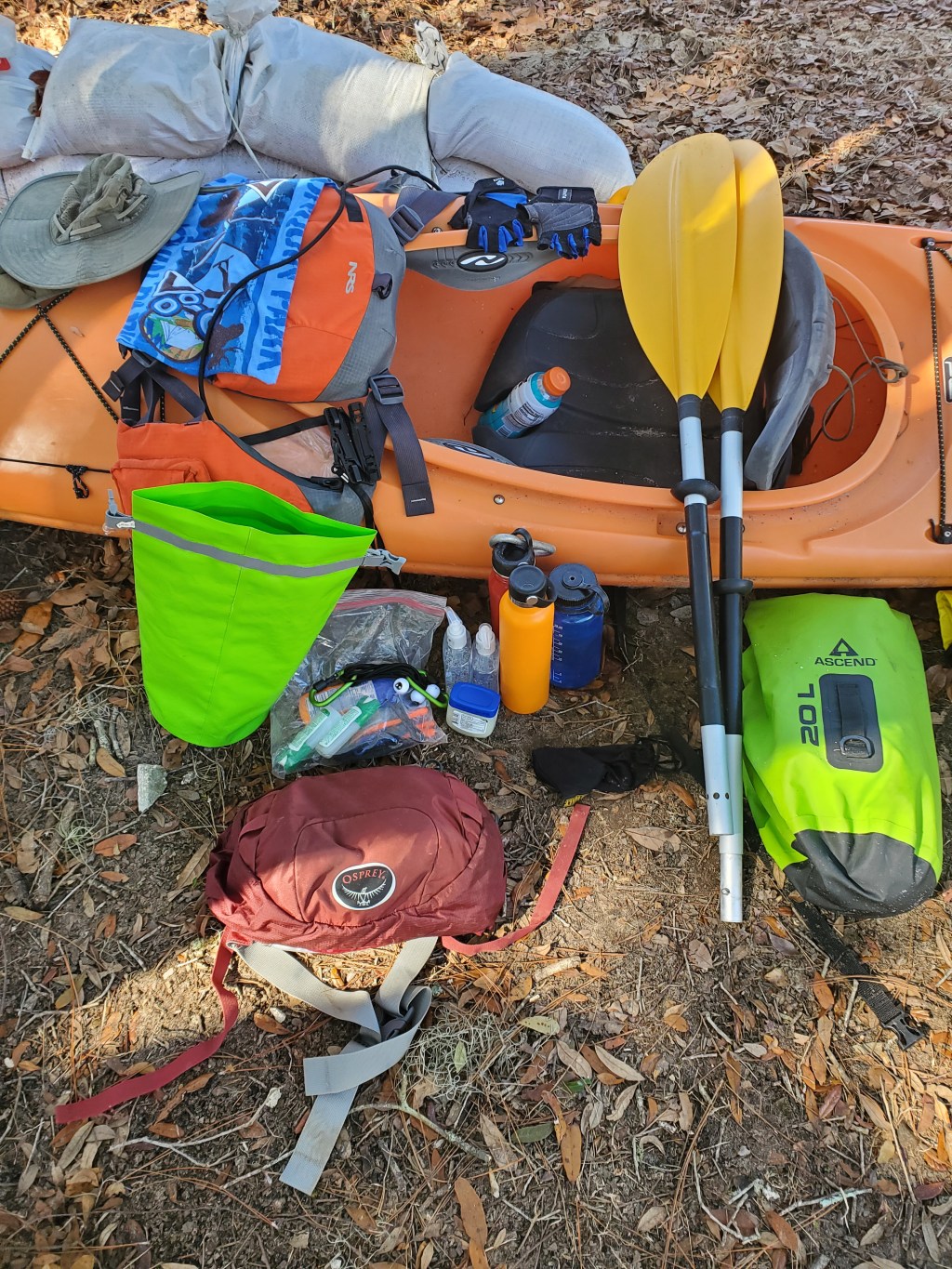
Obviously this is where I am going to be packed in as well as any gear that doesn’t find its way into the other compartments. The more I put here the less space I have to be comfortable. Getting in and out of the kayak is an art and is when you are most likely to turn over. So to eliviate too many bathroom breaks where I needed to get out, I had a bottle in the seat I used to urinate into and empty later.
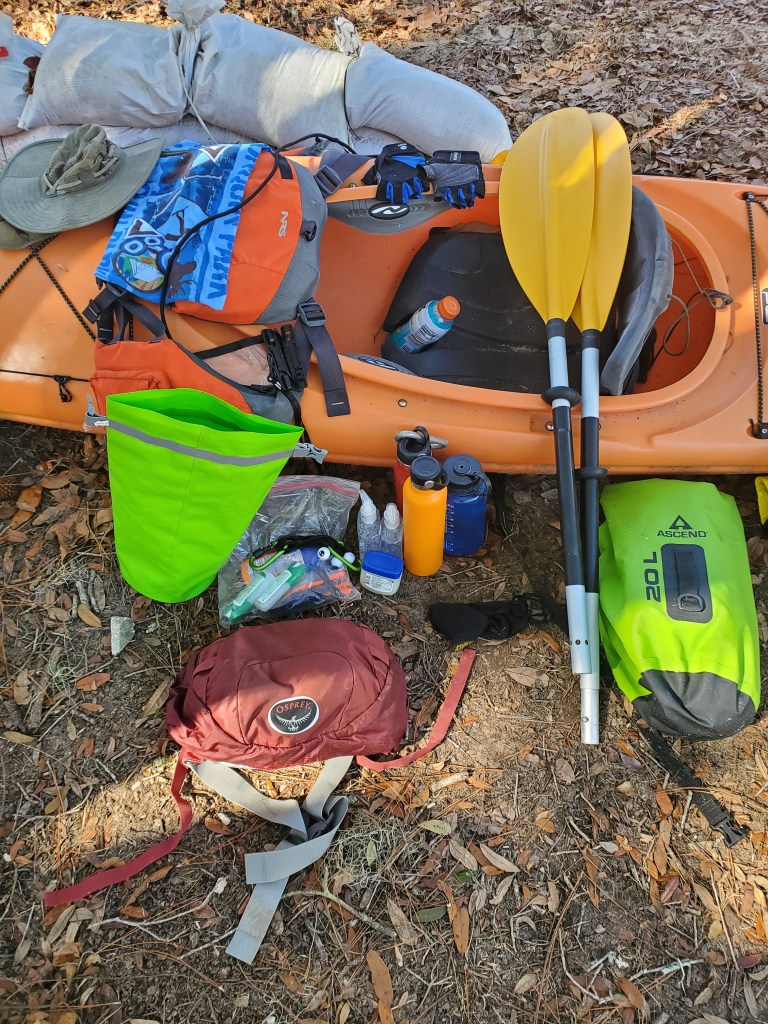
In the space inside the cockpit I have the green 20L bag on the right above. In it is a pad I need (most likely further along in the trip) to assist in keeping me warm in the hammock; it normally resides behind the seat. Two of the water bottles (for daily consumption) are stored one on each side of the seat for easy access. The jar of petroleum jelly is used on the cart (to lube the wheels) or as first aid on sun burns. That along with the bug spray, sun screen and gear ties are also stored behind the seat. The two containers of hand sanitizer if not behind the seat are normally in the front compartment. The small black bag contains extra elastic ties, and extra carabiners once again all stored behind the seat.
The red osprey bag is my “ditch Kit” from my canoe. It contains:
- a compas
- fire staters
- water proof matches
- Book matches in a pill container
- Magnesium fire starter
- emergency SOL Bivvy (small light weight shelter)
- foldable bucket
- folding saw
- space (mylar) blanket
- shoe laces, thread, sewing kit
- duct tape
- backup phone case
- wind screen (for fire/stove)
- TP (toilet paper)
- trash bag
- bug net that protects my head/face (worn over the hat)
- extra floaty for the GoPro
I place this bag under the knee that is most stressed (so it moves throughout the day), to give it some support/rest. Then there is the computer bag:
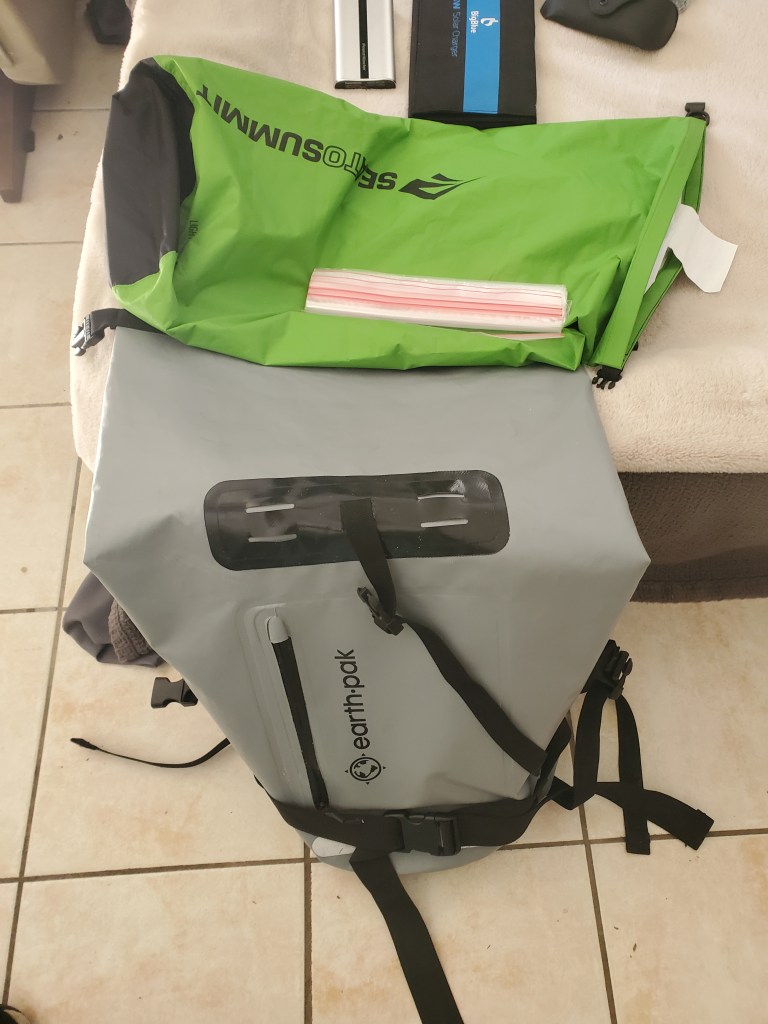
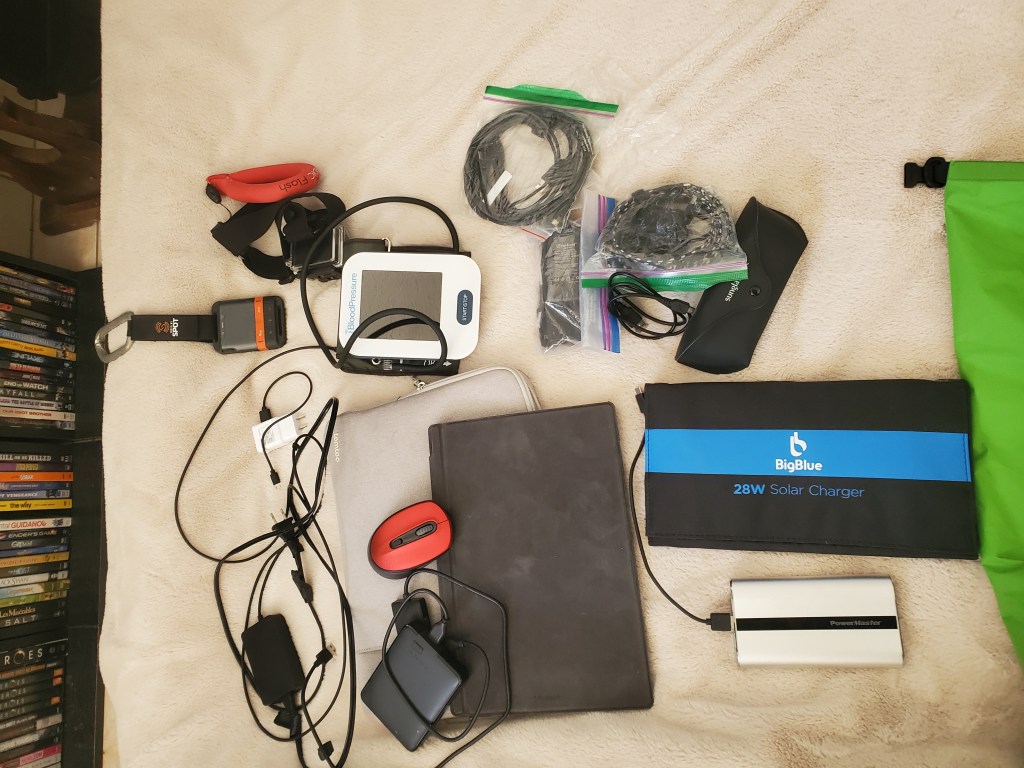
In the first picture are the two bags that make up this componant, a 35 Liter earth-pack and a sea to summit dry bag. Electronics do not like water and are even more adverse to salt water, hence the double bagging. In the bag, from the picture above:
- Windows surface pro and bag
- mouse
- external hard drive
- USB port
- Battery pack
- assorted cabels
- solar charger (never used as I was afraid of what the salt water would do to it)
- extra sun glasses
The computer bag is placed at the front of the cockpit between my feet. So to say I was in the cockpit tight, is an understatement. I had no room for any movement, and my feet would often cramp.
The three items in the top left of the picture are the GoPro hero 3 camera and case on a hat mount, the Spot PLD (Personal Locator Device – aka tracker), and my BP machine. The GoPro and Spot device were worn, and as stated in the previous post the BP machine was in the rear compartment.
On my person as well was my PFD (Life vest), toke (blue cloth in the very first picture (worn around the neck to keep sun off), hat, paddling gloves, my phone in a waterproof case and of course the paddle itself. The paddle was always attached by a teather in case I dropped the paddle or lost it in a roll over or something. I wore sun glasses sometimes, they tended to get wet and I didn’t have a way to dry them off so they would be hard to see through. On top under the cords in front of the cockpit I attached the third water bottle and the green dry bag. The bag contained snacks, lunch, chap stick & wallet. My PFD pockets also carried snacks and tangeriens as well as a pair of 2X reading glasses.
My phone had the Navionics app on it and I needed the 2x glasses to read the app. I tried to keep 2 to 3 days of navigation in the app and more if possible. The app proved its worth on several occasions helping me determine which side of the ICW I should be on and where to look for turns and inlets etc. Placing yourself correctly along your route is a big safety factor as you travel. Making sure that you (the smallest vessel) are placed away from the main traffic, and that you cross the channel in the safest places you could find. Keeping the phone charged and safe was an on going task (easy enough to do but you just had to keep up with it).
The last three things were on top; one all the way up front was the 1 gal. water bottle under the bungee at the very front of the kayak. Then there are my boots and sneakers, they went right behind the cockpit on top under the bungee cords. The sneakers were in a dry bag where the boots were just on the deck below the bag. The cockpit was always covered in the day by my spray skirt, but that did not keep all the water out of the cockpit. Each day I had to dry out the cockpit with towels I had with me (cloth diapers).
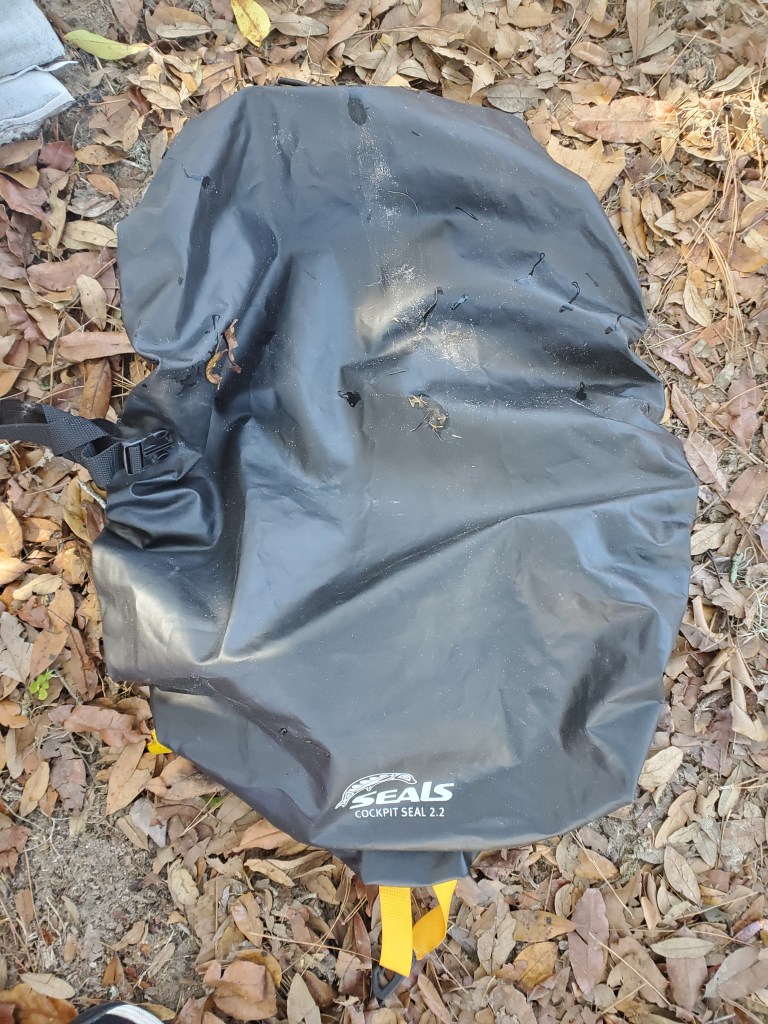
I did have a cockpit cover I carried, (stored again behind my seat) pictured below. I used it nightly so that no new friends (snakes and critters) would surprise me the next day. It also kept any evening rain from gathering in the cockpit I had dried.
So I believe that does it for the gear. Soon I’ll post something about my initial planning with the added advantage of 20/20 hind sight.
Keep paddling.
 Powered by a Paddle
3 responses to “Gear and packing the cockpit.”
Holy crap! It was like you had an entire city crammed into your kayak!
LikeLike
Amazing……would a bigger kayak help on your n3xt trip?
LikeLike
A bigger Kayak would assist in many ways. space is only one, another is that the “ride” would be smoother. 🙂
LikeLike