In the rear compartment were the more functional items if you will. Again the compartment opening limited how big an item could be to just fit in.
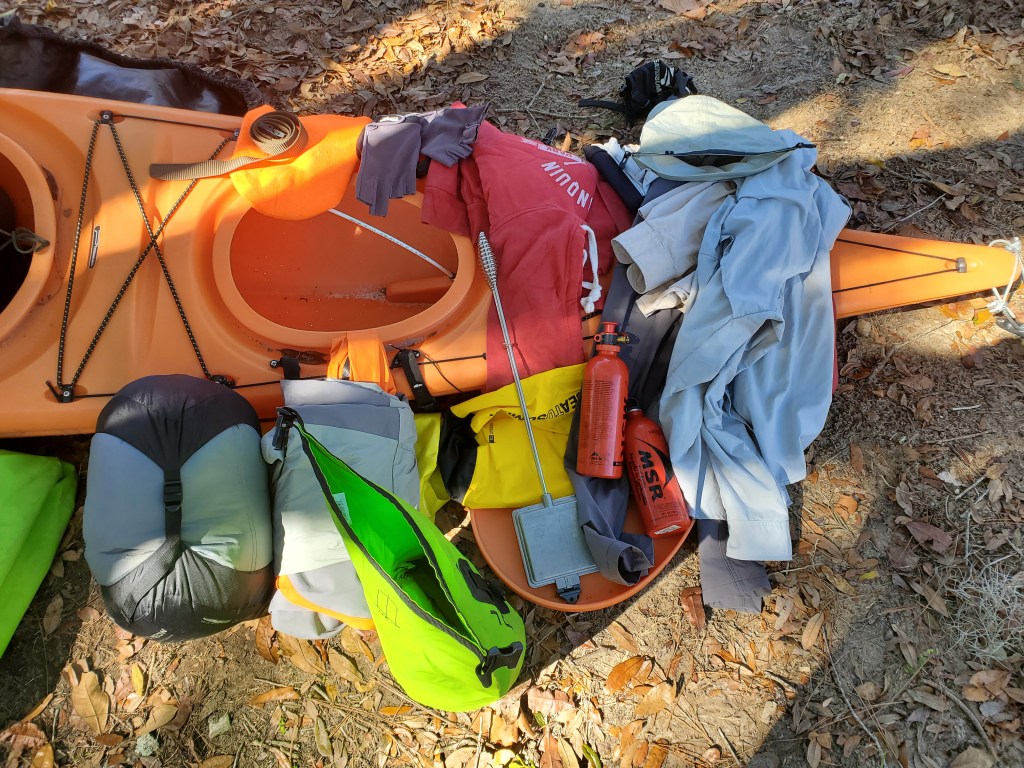
The largest item in this compartment was the sleeping bag. In the picture it is the grey compression sack on the left, it fits into a yellow dry bag seen in the center. My cloths were another larger item – 3 quick dry pants, 3 Columbia brand (60 spf) shirts, 2 base layer shirts, 3 pair of socks (2 pair of silk and 1 cotton), 1 set of thermal ear, a sweatshirt, hat, extra belt and backup paddling gloves. I had to break them into multiple compression dry sacks. Behind the green dry bag is my dry suit, expected to be needed when I got further north and water temps were below 50. The green dry bag was some of the electronics – cables, battery charging stations and I had 1/2 of the gorp is in this bag as well. You can see the two fuel containers and the pie tin (square box with the handles; used to make grilled cheese small pizzas etc). I also carried a blood pressure machine (Medicare wanted me on this program), it used phone reception to report to Medicare. Not pictured are the two tarps for sleeping or just staying dry.
This compartment was a challenge since inside was broken up by the kayak skeg that could be lowered in the wind for stability. The white cable you see is what lowers and raises that skeg. I had to continually rearrange how things were packaged to make it fit well. I placed the handles of the pie tin in the top point of the back, then under that was the dry suit, and one or both of the fuel tanks were wedged in and around those. You then had to fit the sleeping bag in at the back of the cockpit wall and I then placed the BP machine next to it. Once that was all set you had to force the electronics, tarps and cloths into the remaining space. Very tight to say the least.
Now; on top of the rear compartment I had my wheels and water. I needed these wheels in those areas where I needed to go to a hotel or camping area away from the ICW. The water was necessary in case you were stealth or primitive camping.

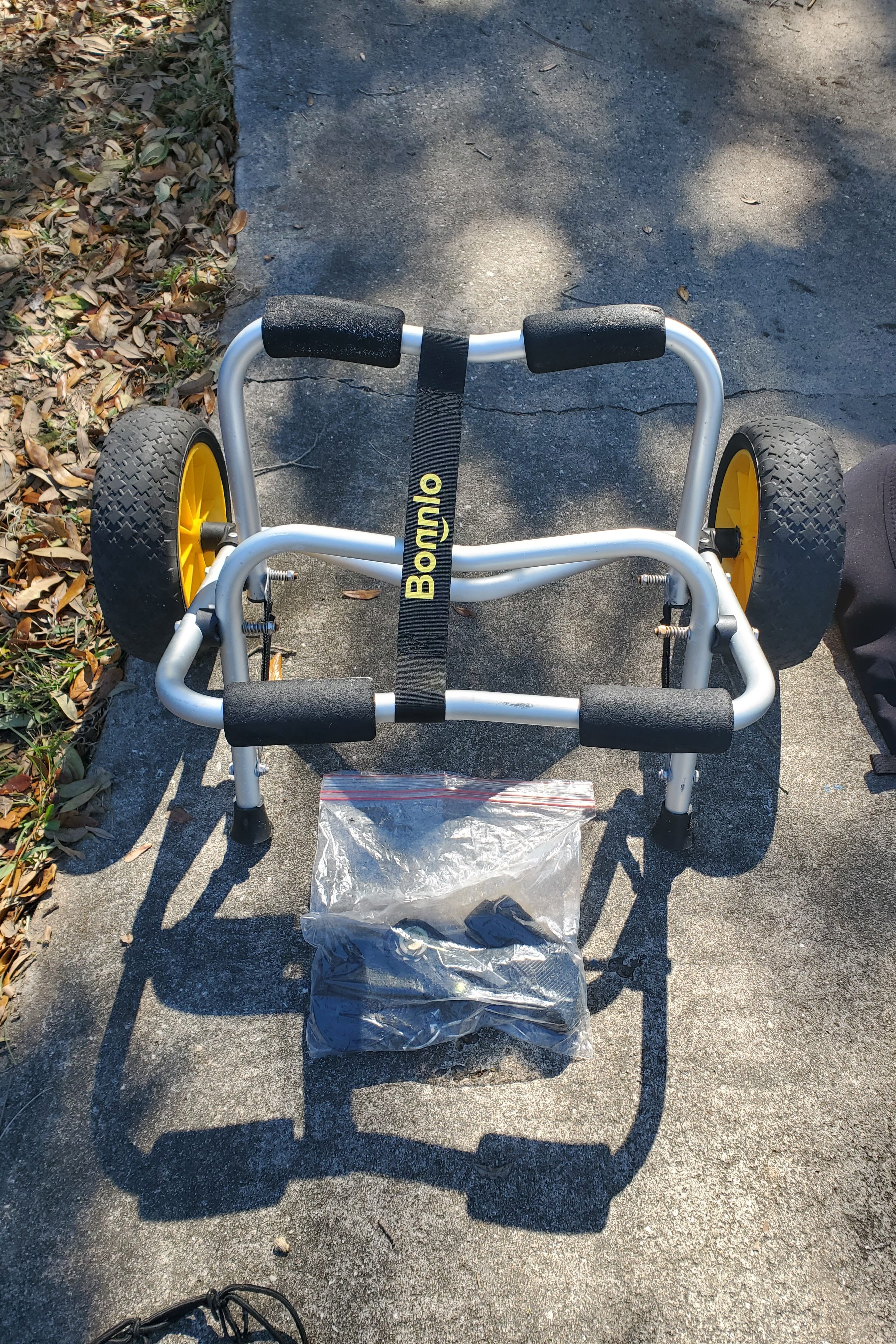
The wheels broke down as you can see in the first pic, and the net seen there was used to keep the set on top of the compartment. The plastic bag of straps and pins were stored in the cockpit for ease of access once at a boat ramp. As for water; I have a 2.5 gal plastic folding water bottle as well as a 1 gal plastic bottle that I carried for camping purposes.
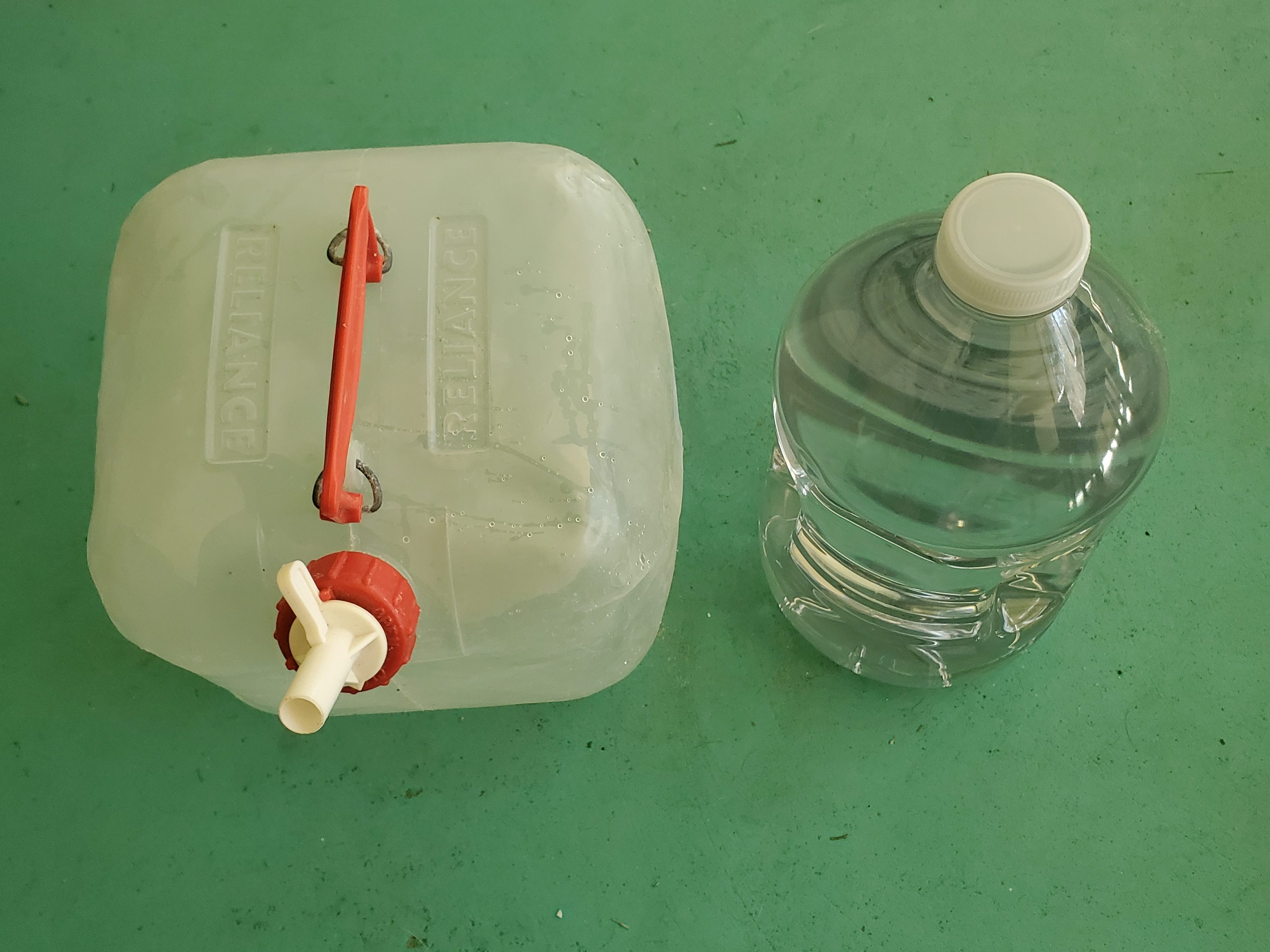
One of these two were placed under the netting with the wheels on top of the folded cart, the other was placed on top up front. The only issue with all of this on top is that it acted as a sail, catching the wind (no matter how light) and that would push the back of the kayak off course. Thank goodness for the skeg, which would help (not alleviate) the course change.
 Powered by a Paddle